Writing

Writing, in progress.

Ideas I am working through about AI, products, and the messy systems underneath both. The operating principles at the bottom are the short version.

Series
Topic
Sort by

Browse by categoryBrowse all topics

Showing 31 of 31 posts

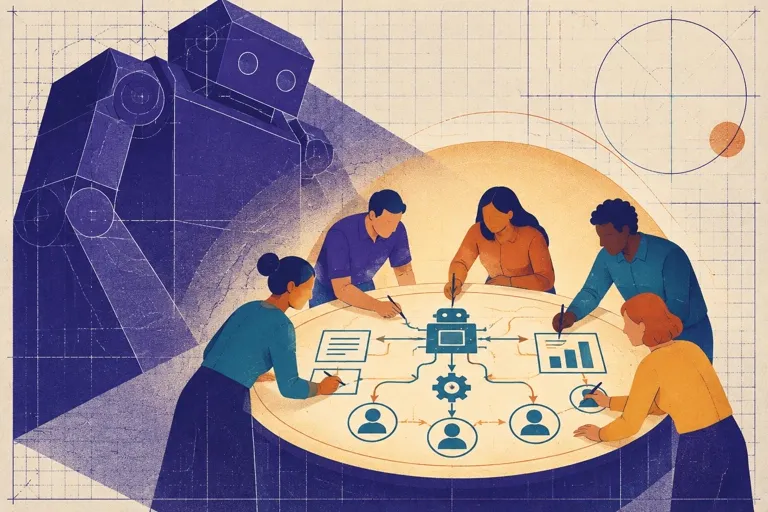
  1. October 9, 20267 minIf Employees Think AI Is Coming for Their Jobs, Start ThereIf employees believe an AI initiative is being done to them, no amount of reassurance fixes it.Trust and Autonomy · AI Transformation · Trust · Human judgment
  2. October 1, 20265 minGive People a Problem, Not a DirectiveAI adoption stalls for a reason most plans never touch: nobody changed how the work gets done. The fix I keep coming back to is simpler than it sounds.In Practice · AI Transformation · Communication · Human judgment
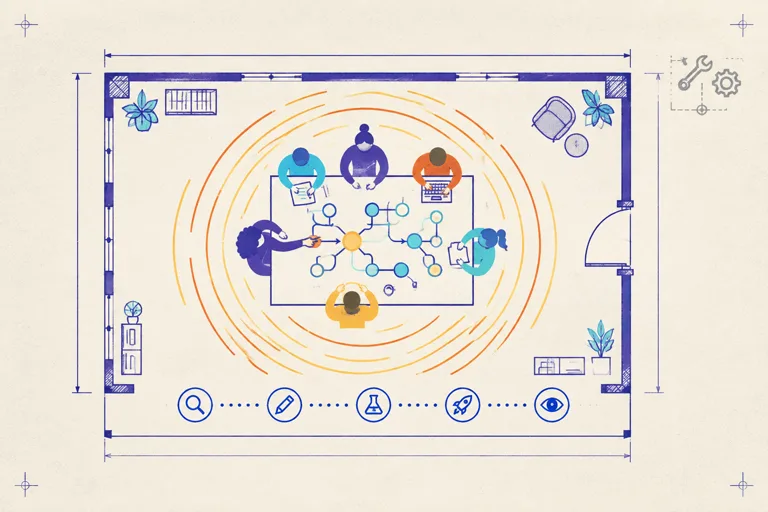
  3. September 29, 202616 minHow to Run an AI Transformation Hackathon That Moves AdoptionAI got rolled out, and the behavior did not change. A hackathon fixes that by giving people a real problem and room to solve it.In Practice · AI Transformation · Communication · Human judgment
  4. September 28, 20268 minWhen Everyone Can Ship, Communication Has to Scale TooAI removed the bottleneck on building. It did nothing for the bottleneck on understanding.Evidence and Context · Shared context · Communication · AI Transformation
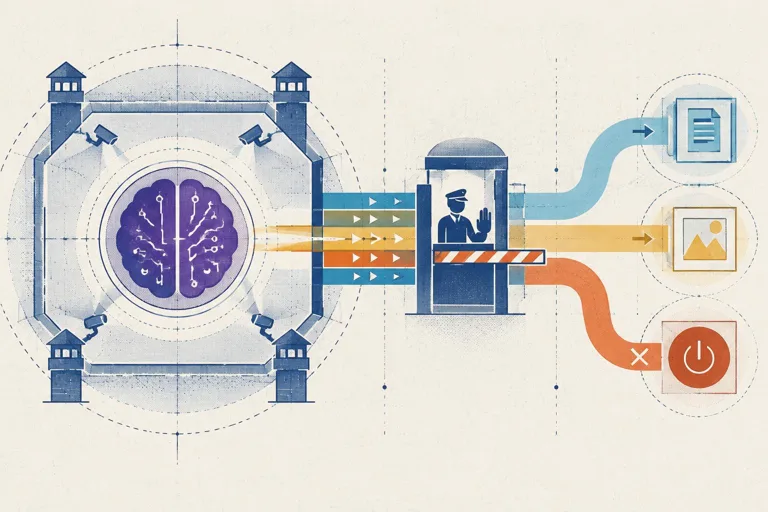
  5. September 17, 20269 minYour AI Profile Is Not a BunkerFear is not an operating model. Here are the house rules I paste into every AI tool I use.Trust and Autonomy · AI safety · Autonomy · Human judgment
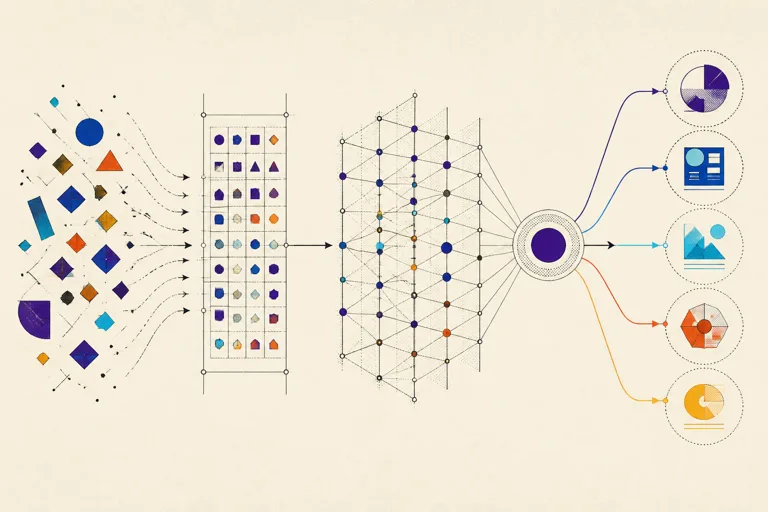
  6. September 15, 202616 minHow I Built an Intelligence Pipeline Instead of an AI AgentThe model was the least interesting part. The difficult work was the pipeline around it.In Practice · AI architecture · Evidence systems · Evaluation
  7. September 10, 202612 minHow I Automated 89% of a Finance Reconciliation Process Without Letting AI Do the MathThe interesting part was not automating Finance work. It was deciding which parts AI should never touch.In Practice · AI Transformation · Finance automation · Human judgment
  8. August 27, 20267 minAI Transformation Is an Operating DisciplineA lot of AI work begins with the tool.Strategy · Series 4: Adventures in AI Transformation
  9. August 27, 202610 minAI Transformation Will Change What It Means to Be a COOAI Transformation is an early version of a capability that will change what it means to be a COO.Strategy · Series 4: Adventures in AI Transformation
  10. August 23, 20269 minYour AI Norms and Values Need to Become System RequirementsMost companies write their AI norms for people.Trust and Autonomy · Series 4: Adventures in AI Transformation
  11. August 16, 20267 minAI Will Scale the Company You Already AreAI doesn’t give a company better judgment, stronger values, or more respect for its customers. It gives the company more capacity.Strategy · Series 4: Adventures in AI Transformation
  12. August 8, 20266 minDemo Velocity Is Not Transformation VelocityAI is making individuals dramatically faster. Organizations aren’t accelerating at the same rate.In Practice · Series 4: Adventures in AI Transformation
  13. August 1, 202611 minYour Company Already Knows More Than You ThinkMost companies don't have a data problem. They have a context problem.Evidence and Context · Shared context · Enterprise AI · Systems thinking
  14. July 26, 20266 minAI Transformation Is a Capability, Not a PersonI’ve stepped into a newly created operating role three times at three major companies. The mandate was different in the details, but the shape of the work was remarkably consistent.Strategy · Series 4: Adventures in AI Transformation
  15. July 19, 20265 minStop Measuring AI AdoptionA company can have high AI adoption and very little to show for it.In Practice · Series 3: How Much Should AI Be Allowed to Do?
  16. July 11, 20266 minEmployees Should Not Have to Become Good at AIA lot of workplace AI adoption still amounts to this: here is a blank box. Type something clever.In Practice · Series 3: How Much Should AI Be Allowed to Do?
  17. July 3, 20266 minLet Employees Break the AIThe people most likely to find the flaws in an AI workflow are usually the people expected to use it.Trust and Autonomy · Series 3: How Much Should AI Be Allowed to Do?
  18. June 28, 20265 minModel Confidence Is Not Workflow TrustA highly accurate model can still power a workflow people have good reason not to trust.Trust and Autonomy · Series 3: How Much Should AI Be Allowed to Do?
  19. June 20, 20265 minAI Should Earn AutonomyCompanies often treat AI autonomy as a setting.Trust and Autonomy · Series 3: How Much Should AI Be Allowed to Do?
  20. June 13, 20266 minAI Transformation Is an Organizational Design ProblemAI stops being just another workplace tool when it begins participating in the work.Strategy · Series 2: The Missing Context Layer
  21. May 31, 20265 minThe Best AI Opportunity May Be Underneath the Work At the SurfaceA request to automate one task can point to a capability that would improve ten workflows.Evidence and Context · Series 2: The Missing Context Layer
  22. May 23, 20265 minA Source of Truth Is an Operating Agreement, Not a PlaceWhen company knowledge becomes fragmented, the natural response is to put everything in one place.Evidence and Context · Series 2: The Missing Context Layer
  23. May 10, 20265 minYour Company Already Knows More Than It Can UseMost companies don’t have a shortage of knowledge. They have customer conversations, product data, support resolutions, sales calls, contracts, project decisions, experiments, process documents, and employees who understand how the business really works.Evidence and Context · Series 2: The Missing Context Layer
  24. May 2, 20265 minYour Employees Are the Integration LayerMost companies have integrated their software less effectively than they think.Evidence and Context · Series 2: The Missing Context Layer
  25. April 19, 20265 minAutomate the Mess, Get the Mess at ScaleAutomation makes work happen faster. That only helps if the work makes sense in the first place.Foundations · Series 1: Before You Automate
  26. April 12, 20265 minSome Problems Need AI. Some Just Need a Query.The best AI strategy includes knowing when not to use AI.Foundations · Series 1: Before You Automate
  27. April 4, 20266 minBefore You Automate, Document the Work That Actually HappensMost companies have more process documentation than workflow understanding.Foundations · Series 1: Before You Automate
  28. March 27, 20266 minBefore You Automate, Map What Your Business Actually KnowsMost AI planning starts with a list of use cases.Foundations · Series 1: Before You Automate
  29. March 19, 20265 minMost Businesses Shouldn’t Start With AIMost businesses shouldn’t begin an AI initiative by asking where they can use AI.Foundations · Series 1: Before You Automate
  30. March 15, 20266 minThe Shiny Object Problem Is Older Than AIEvery wave of new technology arrives with an impressive demonstration, a room full of people imagining what it could do, and a cleanup crew nobody interviews for the follow-up story.Strategy · Series 4: Adventures in AI Transformation
  31. March 7, 20265 minWhat is AI Transformation?AI Transformation sounds like a technical role. A lot of the time, the harder part has very little to do with the technology.Strategy · Series 4: Adventures in AI Transformation

Operating principles

Five ideas the writing keeps coming back to. Each one explains what I mean, what it looks like in practice, and where it came from in my own work.

  1. 01Lead with the problem. The tool is the conclusion.Most organizations start with the technology and reverse-engineer a justification. That order produces expensive answers to questions nobody asked.
  2. 02AI is an amplifier, not a shortcut.It multiplies whatever is already there: clarity or confusion, judgment or guesswork. It does not supply the thing you are missing.
  3. 03Automate the mess and you get the mess at scale.Speed applied to a broken process is not efficiency. It is a faster way to be wrong.
  4. 04Treat operations as products.Internal systems deserve owners, users, research, roadmaps, and success metrics. Most get a spreadsheet and a hope.
  5. 05Design for systems that get stronger over time.The measure of a leader's work is what still functions, and improves, after they leave the room.

Contact

Want the version with numbers attached?

The case studies show the same thinking applied to real problems with real consequences.